
Protein for Muscle Growth and Fat Loss: What to Know


Protein works best as part of a broader routine that includes resistance exercise and balanced nutrition.
Protein is often described as a “muscle-building” nutrient, while high-protein diets are sometimes promoted as a way to “burn fat.” The evidence supports a more measured explanation: protein provides amino acids the body uses to repair and build tissues, and getting enough may help support muscle gains when paired with resistance training. During weight loss, a higher protein intake may also help limit the loss of muscle mass. Protein does not directly burn body fat, and eating more than your body needs does not guarantee better results.
How protein supports muscle growth
Muscles adapt to resistance exercise by repairing and building tissue. Protein from foods is digested into amino acids that the body uses for these processes. Resistance training provides the stimulus; dietary protein supplies materials that support adaptation. Eating extra protein without a suitable training stimulus is not a substitute for strength exercise.
A 2018 meta-analysis reviewed 49 randomized trials involving 1,863 healthy adults who did resistance training for at least six weeks. Protein supplementation produced small additional average increases in fat-free mass and strength compared with training alone. In that analysis, no further average gains in fat-free mass were detected once total protein intake was above roughly 1.6 grams per kilogram of body weight per day. This is a study finding, not a target everyone needs to follow. Results vary with training experience, age, diet, health, and study methods.
A separate 2022 review of 74 randomized trials also found small additional gains in lean body mass when adults combined increased protein intake with resistance exercise. Effects on strength and physical function were smaller or unclear, and the included studies varied in design. Together, these reviews suggest that protein can complement progressive strength training, but it is not a shortcut to rapid muscle growth.
Protein during fat loss
To reduce body fat, a person generally needs a sustained pattern that uses more energy than it takes in. Protein alone does not create a reliable fat-loss result. However, weight-loss plans can also reduce lean tissue, including muscle. A 2024 systematic review and meta-analysis of 47 studies with 3,218 adults with overweight or obesity found that increased protein intake helped reduce the decline in muscle mass during weight loss. It did not significantly prevent declines in strength or physical function, and study quality varied.
This distinction matters: preserving more muscle while losing weight is not the same as protein directly “melting” fat. Sustainable food choices and regular physical activity remain important. The National Institute of Diabetes and Digestive and Kidney Diseases recommends a healthy eating pattern that can be maintained over time, alongside physical activity.
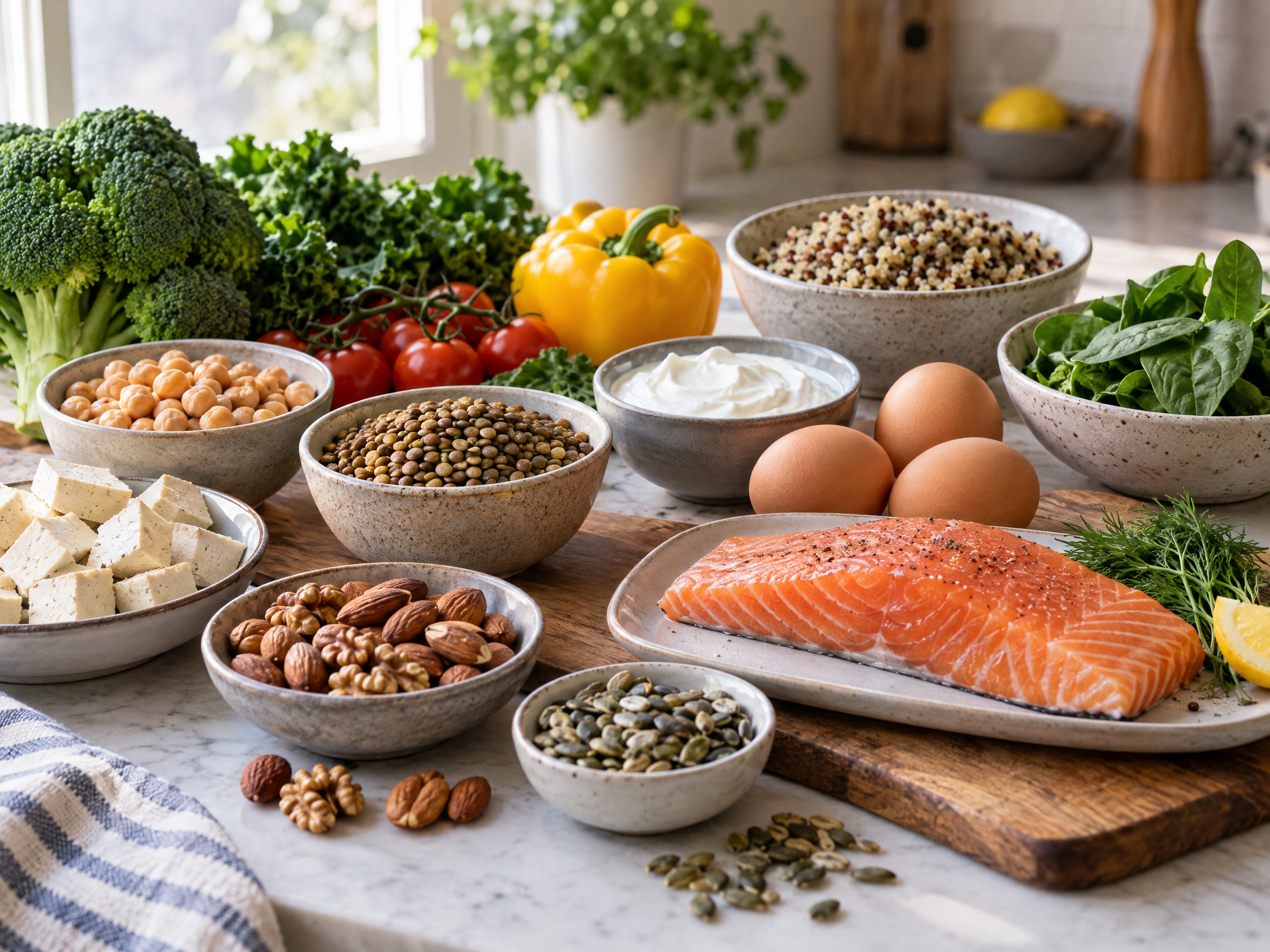
Protein comes from many foods; a varied diet can include both plant and animal sources.
How much protein do you need?
Needs differ according to age, body size, health, pregnancy, activity level, and personal goals. The American Heart Association lists the recommended dietary allowance for adults as 0.8 grams per kilogram of body weight per day. This is a general reference for healthy adults, not a personalized muscle-building target.
People who train regularly may have different needs from sedentary adults, but there is no one amount that guarantees muscle gain or fat loss. The research findings above should not be treated as instructions to take a supplement or push intake as high as possible. If you want an individualized target, a registered dietitian or healthcare professional can take your overall diet, training, and health into account.
It is usually possible to get protein from everyday foods. Options include beans, lentils, chickpeas, tofu, nuts, seeds, eggs, fish, poultry, lean meats, milk, and yogurt. Plant-based eating can provide protein too; including a variety of plant foods across the day can help create a balanced pattern.
Simple ways to include protein in meals
•Add beans, lentils, tofu, or eggs to a meal with vegetables and whole grains.
•Choose fish, poultry, or lean meat when these fit your preferences and diet.
•Use yogurt, milk, soy foods, nuts, or seeds as convenient options.
•Think about the whole meal, not only protein. Fiber-rich plants and other nutrient-dense foods also matter for health and fullness.
You do not have to eat protein immediately after every workout to benefit from training. A practical goal is to include protein-containing foods regularly as part of your normal eating pattern and make sure your overall meals support recovery.
Protein powders and supplements: are they necessary?
Most people can meet their protein needs through food. Protein powders may be convenient in some situations, but they are not required for building muscle, and they do not replace a complete diet or a well-planned training routine. Supplements can vary in ingredients, serving sizes, added sugars, and calories, so read labels and consider discussing them with a qualified professional if you have a medical condition or take medication.
More protein is not always better. Choosing large amounts of high-saturated-fat protein foods may displace other nutritious foods, and the American Heart Association encourages a variety of protein sources, including plant options and seafood.
Training and recovery still matter.
For general adult health, the CDC recommends at least 150 minutes of moderate-intensity aerobic activity each week, or an equivalent amount of vigorous activity, plus muscle-strengthening activity on at least two days. Strength sessions should involve the major muscle groups. Beginners can start with manageable activity and build gradually.
To support muscle growth, follow a resistance-training plan that becomes appropriately more challenging over time while allowing recovery. Sleep, sufficient overall food, and consistency also matter. If your goal is fat loss, extreme calorie restriction can make training and recovery harder. Consider guidance from a registered dietitian or qualified exercise professional if you are unsure how to balance your goals.
Who should get medical advice before increasing protein?
If you have chronic kidney disease, ask your healthcare professional or kidney dietitian what amount and type of protein is appropriate. Needs can differ by kidney function and whether a person is receiving dialysis. The National Kidney Foundation advises individualized guidance rather than applying a high-protein fitness plan to everyone with kidney disease.
Pregnant or breastfeeding people, adolescents, older adults with frailty, and people managing chronic conditions may also need tailored nutrition advice. Seek professional support if you have unexplained weight changes, difficulty eating enough, or a history of disordered eating.
Frequently asked questions
Does protein burn fat?
No. Protein is not a fat-burning supplement. During a calorie-controlled weight-loss plan, higher protein intake may help preserve lean mass, but fat loss depends on the overall pattern of energy intake, activity, and health factors.
Can I build muscle without protein supplements?
Yes. Protein supplements are optional. Foods such as beans, lentils, soy, eggs, dairy, fish, and lean meats can provide protein. Resistance training and an overall diet that meets your needs are more important than buying a particular powder.
Does eating more protein always mean more muscle?
No. Protein can support training adaptations, but the effect is modest and depends on resistance exercise and total diet. In one meta-analysis, additional benefits to fat-free mass were not detected beyond about 1.6 g/kg/day on average among the studied adults in resistance-training trials. That number is not a universal prescription.
Is plant protein enough for strength training?
Plant foods can contribute substantial protein. Beans, lentils, soy, nuts, seeds, and whole grains are options. A varied eating pattern can help meet protein needs without relying on animal foods.
The takeaway
Protein supports tissue repair and can help complement resistance training. During weight loss, higher intake may help preserve muscle mass for some adults, but it does not directly burn fat and does not replace a balanced eating pattern or exercise. Choose protein foods that fit your preferences and health needs, and seek personalized advice if you have kidney disease or another condition that affects diet.
This article is for general education only. It is not a diagnosis or an individualized nutrition, exercise, or medical plan.