
Does Drinking Water Burn Fat? The Role of Hydration in Weight Management


Water supports normal body functions, but it is not a stand-alone fat-loss treatment.
Does water burn body fat?
No—drinking water does not directly melt or “burn” body fat. Water is essential for normal body functions, including regulating temperature and helping the body remove waste. But drinking extra water by itself is not a proven way to make the body lose fat.
That distinction matters because online advice sometimes presents a particular glass size, schedule, or “detox water” recipe as a fat-burning method. The evidence does not justify those promises. A 2024 systematic review of 18 randomized clinical trials found that the overall quantity and quality of evidence on changing daily water intake was limited. A small number of studies suggested possible weight benefits, while other trial outcomes were negative or inconclusive.
Hydration may still support a weight-management routine in practical ways. The strongest straightforward example is substitution: plain water has no calories, so choosing it instead of a sugary drink can reduce calories from beverages. Any effect on body weight depends on the full pattern of eating, activity, health, and habits—not water acting as a fat burner.
How hydration may fit into weight management
Replacing sugary drinks can lower beverage calories.
Regular soda, sweetened coffee or tea, sports drinks, and other sweetened beverages can add calories. The CDC notes that replacing sugary drinks with plain water can help reduce calorie intake. This change may be useful if it fits your preferences, but it does not require giving up every beverage you enjoy or following a rigid rule.
For example, if you usually drink a sweetened beverage with lunch, you could try water or an unsweetened drink on some days. If you do this consistently and do not compensate by eating or drinking more elsewhere, the substitution may contribute to a lower overall calorie intake. The outcome varies from person to person.
Water before meals has limited, specific evidence.
Some research has tested drinking water shortly before meals. In one 12-week randomized trial, 48 adults aged 55 to 75 who had overweight or obesity followed a reduced-calorie diet. The group assigned to drink 500 milliliters of water before each main meal lost about 2 kilograms more, on average, than the diet-only group.
This result should not be treated as a universal prescription. The trial was relatively small and involved older adults who were also following a calorie-restricted diet. It does not show that everyone should drink that amount before meals, nor that water alone caused the weight change. If drinking before meals feels uncomfortable or conflicts with medical advice, skip it.
Staying hydrated can support activity and daily function.
Water helps the body maintain a normal temperature and lubricate joints. Fluid needs may rise in hot weather, during more physical activity, or when someone has a fever, vomiting, or diarrhea. Being adequately hydrated can support normal daily functioning, but that is different from water directly increasing fat loss.
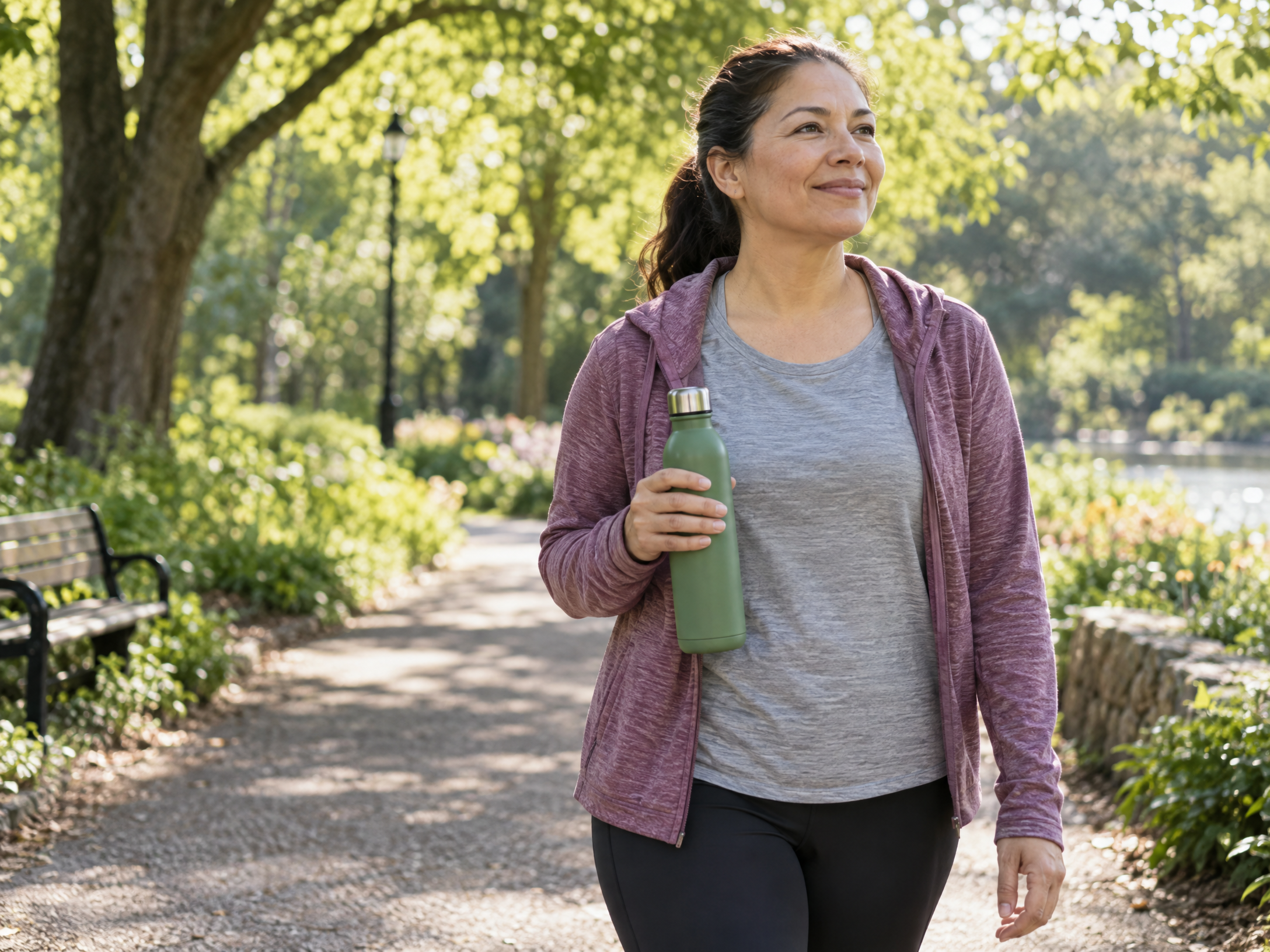
Bring water when it suits your activity and conditions; the amount needed varies.
How much water should you drink?
There is no single daily target that is right for everyone. Fluid needs vary with factors such as age, activity, climate, pregnancy, breastfeeding, health conditions, and medicines. Fluids also come from other drinks and from foods such as fruits and vegetables.
Rather than forcing a fixed number of glasses as a weight-loss tactic, make water available and drink regularly in a way that suits your needs. Increase attention to fluids when you are sweating more or exercising in hot conditions. Follow a clinician’s advice if you have been told to limit fluids or have a condition affecting your heart, kidneys, or liver. NIH guidance also notes that needs depend on personal and environmental factors.
You do not need to wait until you feel severely thirsty to remember water, but you also should not force large amounts quickly. Drinking far more than your body needs can disturb the balance of water and electrolytes. MedlinePlus lists both too little and too much water among possible causes of fluid imbalance.
Practical hydration habits for a fitness routine
•Keep a reusable bottle nearby if it helps you remember to drink.
•Choose water with meals or when you are thirsty; add lemon or another fruit slice for flavor if you like.
•Consider replacing some sugary drinks with water or another low-calorie option, rather than adding water on top of everything else as a “fat-burning” ritual.
•Drink more thoughtfully during hot weather or longer, sweatier activity, while avoiding forced overdrinking.
•If you are doing prolonged strenuous exercise, have a medical condition, or take medicines that affect fluid balance, ask a healthcare professional for advice suited to you.
For general weight management, pair hydration with sustainable eating habits, regular activity, and enough rest. The CDC’s guidance on healthier drinks emphasizes water as a useful no-calorie option, not as a substitute for an overall health plan.
Common myths about water and fat loss
“Cold water melts fat."
Cold water may feel refreshing, but drinking it is not a reliable fat-loss method. Do not count on water temperature to create meaningful body-fat loss.
“Everyone must drink eight glasses a day."
A fixed eight-glass rule does not account for individual differences, other drinks, water-rich foods, climate, activity, or health needs. General intake recommendations are not personalized prescriptions.
“The more water, the faster the weight loss."
More is not always better. Excessive intake can disrupt fluid and electrolyte balance, and people with certain medical conditions may need specific fluid guidance. Do not use water to suppress hunger in place of meals or to compensate for eating.
“A temporary scale drop means fat has been burned."
Changes in body weight over a short period can reflect fluid shifts, not just body fat. A lower scale reading after sweating or restricting fluids is not proof of fat loss and can be unsafe if it reflects dehydration.
When to seek medical advice
Ask a healthcare professional how much fluid is appropriate if you have kidney, heart, or liver disease; take medicines that affect fluid balance; are pregnant or breastfeeding; or have been advised to restrict fluids. Consult a clinician if you have ongoing vomiting or diarrhea, unusual thirst, or symptoms that concern you.
Severe dehydration can become dangerous. NIH lists confusion, fainting, inability to urinate, and rapid heartbeat or breathing among serious warning signs that require prompt medical attention. Do not try to treat severe symptoms by forcing large amounts of water.
The takeaway
Water is important for health, but it does not directly burn body fat. Its most practical role in weight management may be helping replace higher-calorie drinks and supporting normal hydration for daily activity. Choose a drinking pattern that fits your body and circumstances, and avoid both exaggerated fat-burning claims and forced overhydration.
This article is for general education only. It is not a diagnosis or an individualized nutrition or fluid plan.